Seven UK Weaving Courses Worth Travelling For in 2026

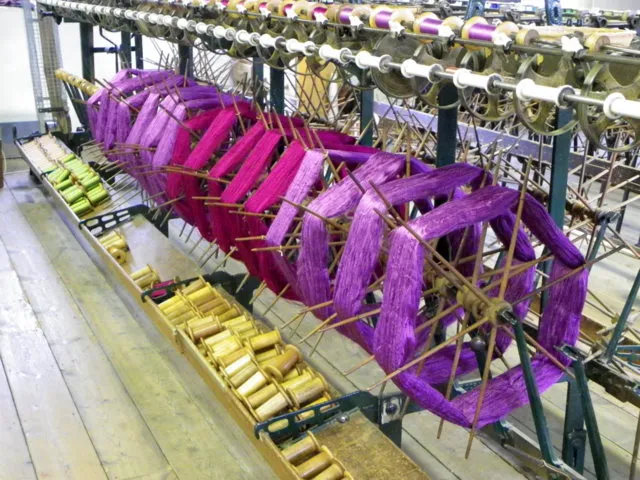
Photo: weaving loom classroom UK heritage mill course handweaving, via www.sciencesource.com
There is a moment in every weaving course when the room goes quiet and everyone stares at their own loom. The warp is on, the treadles are tied up, and the first pick is about to happen. No video tutorial can reproduce that. You cannot pause a room. You cannot rewind a tutor who has just spotted the threading error you have been staring past for an hour. That is why learning in a room full of looms still beats a screen, especially once you move beyond plain weave.
This shortlist is not a ranking. It is a set of courses and short residencies in the UK worth travelling for in 2026 if you want structure, not just a nice day out. Costs are rough and change; check directly before booking. The common thread is that each course teaches something you cannot easily teach yourself: loom dressing under pressure, structural thinking, or the discipline of finishing cloth properly.
Why the room matters
A good weaving room gives you three things a video cannot. The first is diagnosis. A tutor can see why your selvedges are drawing in, why your beat is uneven or why your treadling is producing floats. The second is comparison. You can look at the loom next to yours and see a different way of solving the same problem. The third is rhythm. Weaving is physical. You learn the pace of winding on, the feel of a good beat and the point at which to stop and fix something rather than carry on.
That is why the courses below are not all about fancy patterns. Some are about getting the foundations right. Some are about breaking them deliberately. All of them assume you will leave with your hands knowing more than your notes do.
1. West Dean College, West Sussex — loom dressing intensive
West Dean has long been a serious place to learn craft, and its short weaving courses are the kind that attract people who want to understand their loom rather than just use it. The beginner-to-intermediate intensive is built around dressing a floor loom from scratch: calculating warp, winding a warp, beaming, threading and sleying. You will make a sampler, but the sampler is not the point. The point is that you leave able to repeat the process at home without panic.
Who it suits: makers who own a loom and have been avoiding the warping board. Rough cost: £450–£650 for a short course, depending on length and materials. It is not cheap, but it is the kind of foundation that saves you years of guesswork.
2. Dovecot Studios, Edinburgh — tapestry and structure
Dovecot is a working tapestry studio with a heritage that stretches back to the 20th century, and its short courses have a clarity that comes from professional practice. The tapestry-focused sessions are excellent for understanding weft-faced cloth, colour blending and the discipline of building an image in yarn. It is not a floor-loom production course, so do not book it expecting to learn industrial repeat. Book it if you want to slow down and look harder at what a weft can do.
Who it suits: weavers who want to loosen up their pattern thinking and learn from a tapestry workshop. Rough cost: £250–£400 for a short course or workshop.
3. Uist Wool, North Uist — yarn, place and small-loom residency
A course in the Outer Hebrides is a commitment, which is part of the appeal. Uist Wool works with local fleece and a small mill, and its short residencies are shaped by the yarn supply rather than a fixed project. You might spend the morning sorting fibre and the afternoon weaving a sample that responds to what is available. The teaching is practical, but the real lesson is how material constraints sharpen design.
Who it suits: weavers who want to work with British wool and think about cloth as a local product. Rough cost: £500–£800 for a short residency, plus travel and accommodation. Budget for the ferry and the weather.
4. Sunny Bank Mills, Farsley — heritage mill weaving days
Sunny Bank Mills in West Yorkshire is a former woollen mill that has been reinvented as a cultural and business hub. Its weaving workshops are a good entry point for anyone curious about how cloth was made in a mill context, with the bonus of being surrounded by the building’s own history. The teaching is accessible rather than advanced, but the setting does something useful: it makes the scale of textile production visible.
Who it suits: beginners and fashion-curious makers who want context with their craft. Rough cost: £95–£160 for a day workshop.
5. The Weaving Shed, Cardigan Bay — advanced structures
This is the one for weavers who have done plain weave and want to get properly lost in structure. The advanced sessions cover deflected double weave, block weave and collapse effects, with an emphasis on sampling before you commit to a warp. The tutor style is direct: you will be encouraged to make the ugly sample first, then refine. That is exactly right. Advanced weave is not about prettier patterns; it is about understanding how threads interact.
Who it suits: confident weavers with a few warps behind them. Rough cost: £480–£700 for a multi-day course. Expect homework.
6. Ditchling Museum of Art + Craft, East Sussex — dye and weave
Ditchling’s craft courses are small and rooted in the museum’s collection, which makes them feel less like a generic workshop and more like a conversation with a place. The dye-and-weave days are particularly good for weavers who want to connect colour to cloth. You will work with natural dyes and simple weave structures, and you will leave with samples that show how a dye bath changes under different conditions.
Who it suits: makers who want a gentler, research-led day with a strong sense of place. Rough cost: £85–£140 for a day workshop.
7. Bristol Weaving School — beginner to intermediate floor loom
Bristol has a strong maker network, and this small school runs floor-loom courses that are deliberately capped so everyone gets attention. The beginner course covers winding on, threading, tie-up and basic structures. The intermediate course moves into twill variations, colour-and-weave and simple double cloth. The atmosphere is friendly but not sloppy: you will learn to read a draft and fix your own mistakes.
Who it suits: UK makers who want a city-based course with a clear progression path. Rough cost: £320–£520 for a short course.
How to choose
Ignore the course with the most beautiful finished samples. Choose the one that teaches the process you have been avoiding. If you have never dressed a loom alone, book the intensive. If you can dress a loom but your structures are stuck in plain weave, book the structural course. If you are burning out on production, book the residency that makes you slow down.
And if you are tempted to learn from a screen instead, remember this: a video can show you a treadling sequence, but it cannot put a hand on your warp beam and say, ‘not like that — like this.’ That is worth the train fare.