Soil, Stems, Skein: Inside the UK Dye Gardens Feeding Handwoven Colour
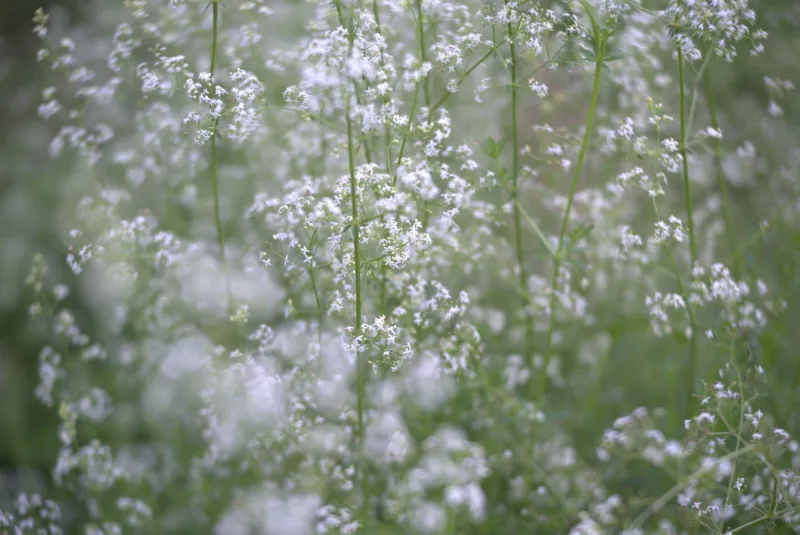
There is a particular kind of quiet in a dye garden in late summer. The weld is tall and yellowing, the madder has gone sprawling, and the woad looks like the least promising crop on earth until someone starts rubbing a leaf between their fingers. At Hollow Lane Dye Garden, a half-acre plot on the edge of Frome, grower Maud Berkeley is already thinking about the weavers who will take away her harvest in sacks and paper bundles. ‘They do not want a paint chart,’ she says. ‘They want to know what the soil did this year.’
That is the shift worth noticing. Natural dyeing in the UK is no longer just a weekend experiment with onion skins and a jam pan. A growing number of growers and handweavers are building working relationships around specific plots, specific plants and specific seasons. The result is cloth that carries a place in its colour: not Pantone, not repeatable at the click of a button, but soil-led and deliberately local.
The garden is the first draftsman
Most of the dye gardens I have visited are not grand. They are allotments with a serious plan, walled gardens with a row set aside, or community plots attached to a mill or a maker space. What they share is a willingness to grow colour slowly and to accept that the harvest will vary. Berkeley grows madder, weld and woad for a small list of weavers, dyers and textile students. She does not promise a standard shade. She promises a starting point.
‘Madder is the long game,’ she says. ‘You are waiting two or three years for roots worth lifting. Weld is more generous, but it wants a different kind of ground. Woad is the one that makes people feel like alchemists.’ That alchemy matters to handweavers because the plant is only half the story. The other half is the mordant, the water, the pH, the temperature and the patience of the person stirring the pot.
From bed to bath to loom
The route from garden to loom is less romantic than it sounds, which is part of its charm. Madder roots are lifted, washed and chopped before they are simmered. Weld is harvested for its leaves and stems, usually before it sets seed. Woad leaves are processed in a fermented vat that smells exactly as agricultural as you would expect. Each plant asks for different handling, and each gives a different kind of colour.
Madder is the warm one: coral, brick, rust and, with the right mordant and water, a deep turkey red that feels almost impossible from a root. Weld is the clear yellow, the one that makes greens when it is overdyed with woad or indigo. Woad is the blue, but it is also the plant that teaches humility. A weak vat gives pale grey-blue; a good vat gives a blue with depth. The difference is not just recipe. It is leaf quality, water chemistry and timing.
Aisha Rahman, a handweaver in Bristol, works with Berkeley’s dye garden for a small run of scarves and samples. She dyes skeins rather than whole warps, partly because her loom is small and partly because she wants the variation. ‘I do not want the cloth to look like it came out of a printer,’ she says. ‘I want the weft to shift a little. That is the point of working this way.’ Her samples are labelled with the grower, the harvest date and the mordant. It is a simple system, but it is the difference between a pretty experiment and a practice you can build on.
Three plants, three temperaments
Madder, weld and woad are not interchangeable. Madder likes a decent soil and a long season. Weld is more forgiving on poorer ground and can be grown as a biennial for a stronger crop. Woad is a first-year leaf crop and a hungry one; it rewards attention but punishes neglect. For a UK grower, the weather is always part of the recipe. A wet winter can rot roots. A dry spring can stall weld. A late frost can set everything back.
That is why the best dye gardens are not trying to be colour supermarkets. They are small, seasonal and honest about yield. A weaver who wants a consistent commercial palette will need to blend harvests, keep records and accept that a dye garden is a collaborator, not a supplier of identical batches. A maker who wants a cloth with a year and a place in it will find the variation is the point.
A practical start for makers
If you want to grow your own dye stuffs, start smaller than you think. A metre bed of weld is more useful than a romantic half-field of madder you cannot weed. Learn one plant properly before adding another. Test it on a small skein of the yarn you actually weave with. Keep a notebook with the harvest date, mordant, water source, temperature and result. Photograph the skein in daylight, not under a kitchen bulb.
If you would rather source from a grower, ask questions. Ask what root or leaf was used, when it was harvested and how it was stored. Ask whether the dye stuff was dried or fresh. Ask for a sample before you commit a whole warp. Good growers will not mind. They are usually as interested in the result as you are.
And if you are buying yarn to dye, choose a fibre you can mordant well and a yarn structure that will show the colour. A tightly spun, highly processed yarn can go flat in a weak dye bath. A softer, more open yarn will take colour with more nuance. Wool is the obvious place to start, but linen and cotton can work beautifully with the right preparation.
The colour is never quite the same twice
The appeal of these gardens is not nostalgia. It is control at a human scale. A weaver who knows the grower can plan a season, adjust a palette and make cloth that belongs to a particular place. The colour may not be exactly the same twice, but the relationship is. That is a different kind of consistency: not identical skeins, but a shared understanding of what the soil, the plant and the loom can do together.
At Hollow Lane, Berkeley is already saving seed for next year. Rahman is waiting for the madder to reach its third season. Neither of them is in a hurry. In a textile culture that often prizes speed, that feels like a quiet act of resistance — and a very good reason to keep weaving.