Loom with a View: Britain’s Working Weaving Mills to Visit in 2026
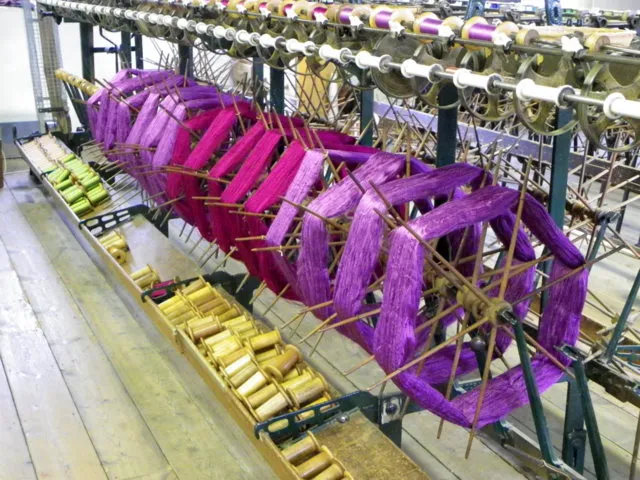
Photo: Maigheach-gheal , CC BY-SA 2.0, via Wikimedia Commons
Fast fashion has trained us to think of cloth as something that appears, fully formed, on a rail. A working weaving mill tells a different story. You see the warp wound onto the beam, the weft packed into place, the cloth creeping forward a few millimetres at a time. You hear the machinery, smell the oil and wool, and realise that a metre of fabric is not a neutral unit — it is a series of decisions made by someone who knows what they are doing.
This is not a list of textile museums with a single static loom in the corner. These are places where the machinery still runs, where the person at the loom might be making cloth for a real order, and where visitors are welcome — with a bit of forward planning. Opening hours change, tours fill up, and some sites are small enough that a coach party would swallow them whole. Always check ahead before travelling.
Wales: small mills, big character
Wales is a good place to start because the scale is human. Melin Tregwynt, near Fishguard in Pembrokeshire, is a working woollen mill with a visitor centre, cafe and shop; when production allows, you can see the mill workings and the weaving shed. Trefriw Woollen Mills in the Conwy Valley is water-powered and has been making cloth for generations, with self-guided tours and working looms. Solva Woollen Mill, near St Davids, is another small working mill where the rhythm of the place is set by the loom rather than the gift shop. The National Wool Museum at Dre-fach Felindre is not a commercial mill, but its working looms and collections give useful context for the Welsh woollen story.
What you learn in Wales is that Welsh cloth is not one thing. There are tapestry patterns, blankets, checks, tweeds and furnishing weights, and the mills often know exactly which local sheep and which finishing method suit each one. Plan for narrow roads, limited parking and seasonal hours. A weekday visit is usually calmer than a weekend, and a quick phone call or website check can save a wasted journey.
Scotland: tweed, cashmere and the slow route
Scotland rewards a slower itinerary. Harris Tweed is the headline act: the cloth is woven by islanders in the Outer Hebrides, often at home, and then finished and verified by mills on Lewis and Harris. Access varies — Carloway Mill and Harris Tweed Hebrides are working sites rather than visitor attractions, so ask before you turn up. On the mainland, Lochcarron of Scotland in Selkirk has a visitor centre and mill tours where you can see weaving in action. Johnstons of Elgin, meanwhile, offers a visitor centre and the chance to understand how cashmere and tweed move from fibre to finished cloth.
What these places demonstrate is the difference between a single loom and a production system. You might see a warp being prepared, a loom being set, or a length of tweed being inspected. The romance is real, but so is the admin: island ferries, seasonal opening, booked tours and the fact that many mills are businesses first and visitor destinations second. Build in time, and don’t assume that every working mill wants coachloads through the door.
England: silk, woollens and industrial-scale craft
England’s weaving landscape is varied. Whitchurch Silk Mill in Hampshire is a working silk mill with tours that let you see looms and understand how silk is thrown, warped and woven. Sudbury in Suffolk has a deep silk-weaving heritage; some mills open by appointment or on special days, so check before you plan a trip. In Yorkshire, Sunny Bank Mills in Farsley, near Leeds, has a weaving shed and archive that connect contemporary studio practice with the region’s textile past. Bradford Industrial Museum runs looms and explains the wider story of worsted cloth, while Saltaire gives you the architecture and social history that shaped so much of the trade.
What you see in England is scale — sometimes small and studio-based, sometimes the ghost of a much larger industry. The best visits make room for both. Watch the loom, then look at the buildings around it. Ask what has changed, and what has not.
What you’ll actually see
A good mill visit is not a theme-park ride. You might see warping, drawing-in, weaving, burling and mending, washing and pressing. You might see a dobby loom or a jacquard, a single weaver changing a pirn, or a length of cloth being checked against a light. Some days will be quieter than others. Production does not run to a visitor timetable.
That is precisely the point. When you watch cloth come off the loom, time becomes visible. You see the labour that fast fashion hides: the setting up, the stopping and starting, the mending, the finishing. You do not have to romanticise it to appreciate it. A working mill is a workplace, not a lifestyle brand.
Plan your visit like a maker
Check opening days first — many mills close at weekends or run tours only on certain days. Book ahead if a tour is offered. Ask about stairs, noise, accessibility and whether photography is allowed. Buy something from the shop if you can; it is the most direct way to support the people keeping the looms running. Use public transport where possible, but check the last bus. And leave room for a wander: the best mill towns are often worth a few extra hours.
Why it matters in 2026
Watching cloth being made is the best antidote to anonymous fast fashion because it replaces a vague label with a concrete process. You see the yarn, the machine, the person and the place. You understand why a length of Welsh blanket or Scottish tweed costs what it does — and why it might last longer than the trend cycle that made you notice it. In 2026, that is not nostalgia. It is a practical way of choosing cloth that has a story you can actually follow.