The Breed Makes the Cloth: A Weaver’s Guide to British Fleece
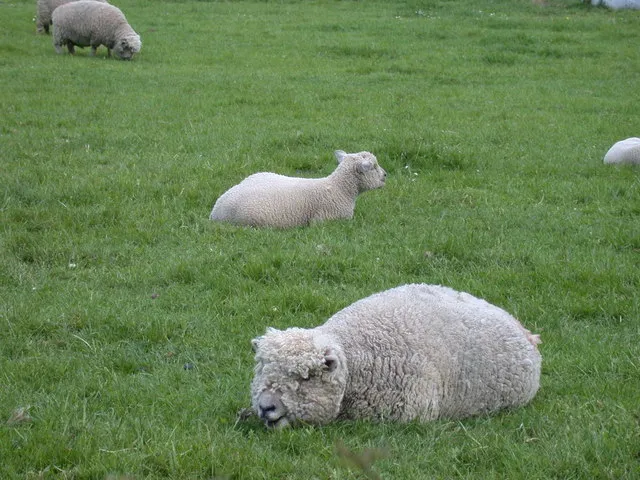
Photo: Keith Edkins, CC BY-SA 2.0, via Wikimedia Commons
British fleece is not one material. It is a spectrum of character, shaped by hill, climate, breed and the hands that skirt and sort it. Ask a weaver why they chose a particular yarn and you may hear about drape, elasticity or how a cloth holds a crease. Ask a breeder and you will hear about weather, lambs and the everyday pragmatics of keeping a flock. In 2026, with more small mills and indie spinners offering breed-specific yarns, it is easier than ever to put those two conversations together at the loom.
Why breed matters at the warping board
Wool is a protein fibre with a memory. The crimp, staple length and diameter of a fleece determine how it spins, how it behaves under tension and how the finished cloth falls. A long, lustrous fleece may give a warp strength and a quiet sheen; a finer, shorter fleece may be better as weft, creating softness and bloom. A sturdy, springy fleece can make a cloth that shrugs off use, while an airy, fine fleece can make something that feels almost weightless against the skin.
This is not a matter of good or bad fleece. It is a matter of fit. The same breed can produce different results depending on age, feeding, weather and preparation. A weaver who understands the broad tendencies of a breed can make better choices at the sample stage, rather than trying to force a yarn into a job it was never suited to.
Three voices from the fleece chain
Megan Pritchard keeps a small flock of Bluefaced Leicester near Llandovery in Carmarthenshire. She describes the breed as ‘a weaver’s fleece with a bit of swagger’. The staple is long and lustrous, with a softness that belies its strength. ‘You can feel the shine in it,’ she says. ‘It takes dye beautifully, and it has enough length to spin a worsted yarn that will hold a warp without fighting you.’
Ruth Kapoor, a hand-spinner and small-batch yarn producer in Bradford, sorts fleece by hand before it reaches the wheel. She looks for consistency first: similar staple length, low vegetable matter, and a crimp that will open easily during carding. ‘A beautiful fleece that is full of kemp or second cuts is a heartbreak,’ she says. ‘You spend your time picking rather than spinning.’ For Ruth, Bluefaced Leicester is a good starting point for newer weavers because it is forgiving, but she also sings the praises of Shetland for weft. ‘It has that soft, airy quality. You can weave a blanket that feels warm without being heavy.’
Then there is Jacob. The breed is often associated with its piebald fleece, but its spinning character is just as interesting. The wool is medium in diameter, springy and full of life. ‘It is not the softest against the neck,’ says Ruth, ‘but it makes a wonderful textural cloth. I like it for bags, throws, anything that needs to hold its shape.’
A simple breed-to-yarn chart
The following chart is a starting point, not a rulebook. Individual fleeces vary enormously, and a good spinner or mill will help you match a specific batch to your project.
| Breed | Fleece character | Best place in the cloth | Try it for |
|---|---|---|---|
| Bluefaced Leicester | Long, lustrous, fine-ish; good crimp | Warp or weft | Soft wraps, lightweight suiting, lace |
| Shetland | Fine, warm, airy; shorter staple | Weft | Blankets, haps, soft garments |
| Jacob | Medium, springy, often piebald | Weft or accent warp | Rugs, bags, textural throws |
| Romney | Medium-long, strong, good lustre | Warp | Durable cloth, tapestry, outerwear |
| Texel-cross | Dense, resilient, less fine | Weft for hard-wearing cloth | Upholstery, heavy throws |
| Welsh Mountain | Short, strong, sturdy | Weft or blended warp | Rug wool, felting, hardy cloth |
Matching fleece to function
If you are planning a warp, look for length and strength. A yarn that is too soft or too short may struggle with the friction of heddles and reed. If you are planning a weft, you have more freedom. A softer, shorter fleece can sit quietly in the cloth, creating a gentle surface and a pleasing hand.
For a first breed-specific project, choose one variable at a time. Weave two small samples with the same sett and the same weft, changing only the warp breed. Or keep the warp constant and try a Shetland weft against a Jacob weft. The differences will be subtle but real: in drape, in weight, in how the cloth responds when you fold it.
A note on provenance and preparation
British fleece has a long and complicated history. The British Wool grading system, the small mills that survived consolidation, and the recent revival of interest in breed-specific yarn all shape what reaches the loom. When you buy British fleece, ask where it was grown, how it was prepared and whether it was spun in the UK. These questions are not about purity. They are about understanding the material.
Preparation matters as much as breed. A poorly prepared fleece can make a good breed feel disappointing, while a carefully sorted fleece can lift a modest breed into something special. If you are buying raw fleece, learn to recognise second cuts, kemp and weak tips. If you are buying spun yarn, ask about the blend and the spinning method.
Start with a sample
The most useful tool in a weaver’s kit is a small sample. It lets you test the relationship between breed, sett, finishing and use. A cloth that feels stiff on the loom may soften after washing. A cloth that feels loose may firm up. Breed-specific weaving is not about finding the perfect fleece. It is about learning how different fleeces behave, and then choosing with intention.
In 2026, that intention is easier to practise. Breed-specific yarns are more available, small mills are more open to conversation, and the Guild of Weavers, Spinners and Dyers continues to connect makers across the country. The fleece is already full of character. The weaver’s job is to let that character show.