The Long Warp: Keeping Hands, Wrists and Shoulders in the Weaving Game
Photo: unnamed US government photographer, Public domain, via Wikimedia Commons
There is a romantic image of the weaver: calm, patient, slightly dusty, lost in the rhythm of the shuttle. It is not untrue. But ask someone who has just spent four hours threading heddles or throwing a shuttle across a wide warp and the romance may be accompanied by a wince. Weaving is physical. The body is part of the equipment, and unlike a loom, it does not come with a manual.
That is the conversation this article wants to have. Not to put anyone off the loom, but to treat the weaver’s hands, wrists, shoulders and back as seriously as we treat tension, sett and selvedges.
The ache nobody mentions at the guild meeting
Textile craft culture is good at talking about patience. It celebrates slow work, repetitive rhythm and the meditative quality of a long warp. What it has been less good at talking about is tendonitis, numb fingers, stiff necks and the low-grade shoulder ache that becomes background noise.
A weaver in Bristol put it plainly: “I thought sore shoulders were just part of it. Everyone I knew seemed to have a bad back or a cranky wrist, so I assumed that was the deal.” That silence is starting to crack. Weaving teachers report more students asking about posture and bench height. Makers are swapping notes on adjustable stools as readily as they swap yarn suppliers. The body is becoming part of the craft conversation, which is overdue.
A bench is a tool, not furniture
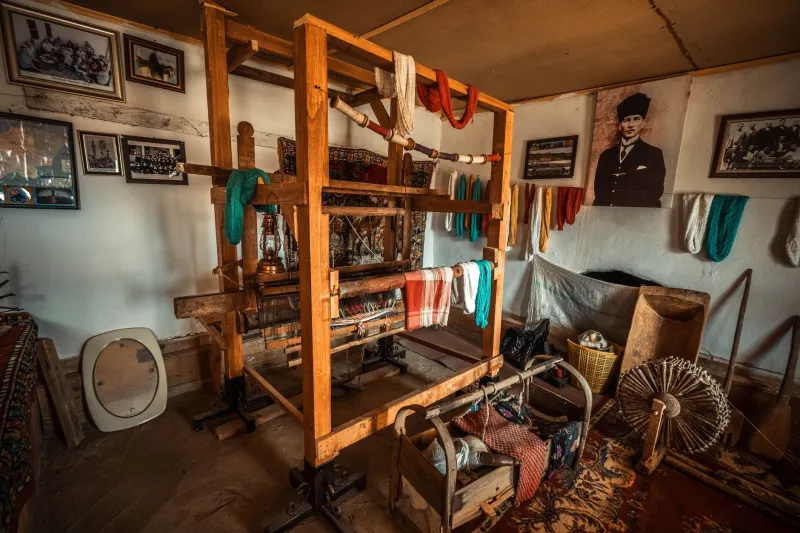
Many of us weave on looms that were inherited, bought secondhand or rescued from a shed. They are wonderful machines, but they were not necessarily built for our bodies. A loom that is too low forces you to hunch. One that is too high makes you reach. A bench that is too deep pushes your shoulders forward; one that is too hard sends pressure through the sit bones and down the legs.
The fix is often unglamorous. Blocks under the loom feet. A cushion on the bench. A cheap adjustable stool from a hardware shop. One maker in Hebden Bridge uses a folded camping mat under her loom and a plywood footrest she made in an afternoon. “The cheapest upgrade is a cushion and a screwdriver,” she says.
The aim is simple: elbows roughly at right angles, shoulders relaxed rather than up by the ears, feet supported, and the working area close enough that you are not constantly reaching. It is worth getting someone to take a photograph of you at the loom. We are terrible at feeling our own posture. The camera is more honest.
Hands are not looms
Hands take a lot of punishment in weaving. Threading heddles involves a pinch grip repeated hundreds of times. Beating is a small, forceful motion. Winding bobbins, tying on, lifting shafts and cutting thrums all add up.
Physiotherapists who work with textile makers tend to say the same thing: variety matters more than any single perfect technique. Break up the task. Do not thread for three hours straight because you want to get it done. Alternate between winding, threading, weaving and tidying. Keep your hands warm, especially in a damp UK studio in February. A hot water bottle on the lap is not a luxury; it is a tool.
It is also worth noticing your grip. A death grip on the shuttle or the beater does not make better cloth. It just makes tired hands. Larger handles, softer grips and a looser hold can help. If a wrist starts to ache, stop and shake it out. If it keeps aching, get it looked at. Weavers are often better at listening to yarn than to their own tendons.
Shoulders carry the shed
Shoulder load is the quiet issue. Reaching across a wide warp, lifting shafts, warping alone, leaning over the back beam—these are not neutral movements. They accumulate. A weaver in Lancashire describes the day she realised she was using her shoulders to do work her feet and bench should have been doing. “I was basically hanging off the loom,” she says. “A lower breast beam and a stool with the right height changed everything.”
Warping is another pinch point. If you can, warp with someone else. Two people can share the reach and the tension. If you work alone, bring the warp to you rather than stretching yourself to it. Keep frequently used tools within arm’s reach. Move your feet, not just your shoulders. And if a loom is too wide for your body, consider whether a narrower one or a different arrangement would let you keep weaving for longer.
The fifteen-minute reset
You do not need a gym membership to look after a weaving body. You need a timer and a bit of honesty. Stand up every half hour or so. Put your hands on the doorframe and lean gently. Roll your shoulders. Walk to the kettle. These small resets are not interruptions to the work; they are part of it.
A physiotherapist working with craft makers once described the ideal as “the posture you can leave.” In other words, can you stand up from the loom without wincing? Can you finish a session feeling tired but not damaged? That is a better measure than any perfect seating diagram.
What a sustainable weaving body looks like
It looks like a loom that fits, a bench that supports and a maker who has permission to stop. It looks like teachers building posture into beginner classes and guilds inviting someone in to talk about wrists. It looks like weavers comparing notes on cushions and footrests with the same enthusiasm they bring to yarn.
Cloth has memory. So does the body. The long warp is a lovely idea—but only if the person at the loom can keep going. Look after the hands, wrists and shoulders. The cloth will be better for it.