After the Final Weft: What Happens When a Weaver’s Studio Goes Quiet
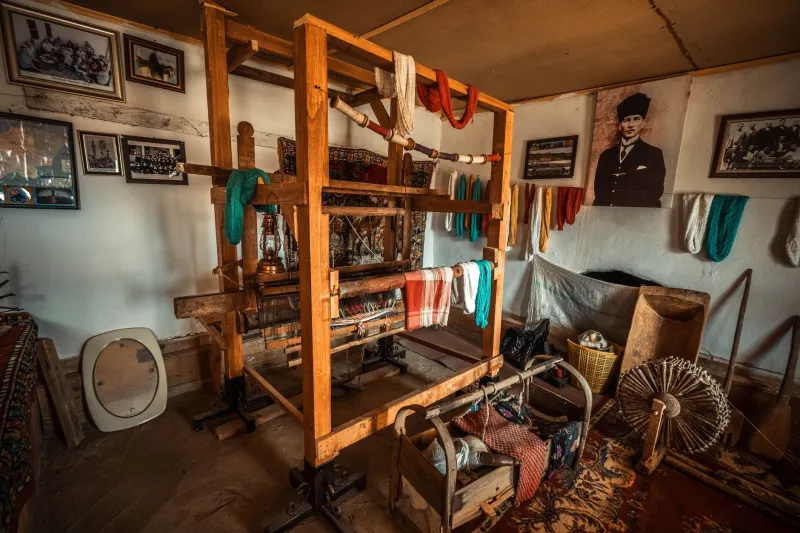
A loom is a difficult thing to ignore. It takes up floor space, demands decent light, and has a way of making a room feel like a workshop even when the warp is empty. But when a weaver stops working — through retirement, illness, a house move or death — the loom is only the most obvious question. The harder question is what happens to everything around it: the cones of yarn kept because they might come in useful, the sample books with their pencilled notes, the reeds in every dent, the jigs, the raddle, the guild newsletters, and the knowledge that never made it into a draft.
Studio dispersal is rarely tidy. It is part practical clearance, part family negotiation and part craft inheritance. And in the UK, it is often handled quietly by people who would rather be weaving than sorting.
The first job is not the loom
Families often start with the machinery because it is the thing they can see. But the yarn stash is usually the bigger job. It is heavy, flammable, sentimental and surprisingly hard to value. One bin bag might hold ordinary coned cotton; another might hold small lots of hand-dyed wool that someone spent years collecting. Moth, damp and sunlight do not care about sentimental value.
Sample books can be even trickier. A folder of swatches may look like scrap to one person and like a working archive to another. The same goes for notebooks: tension calculations, dye recipes, supplier names, breed notes, sett squares, reminders about which warp behaved badly in dry weather. None of it is legally valuable. All of it is useful.
The practical sequence often goes something like this: clear the yarn, photograph the equipment, find homes for the library, then decide about the loom. The emotional sequence is different. It tends to go: put it off, argue gently, remember something, put it off again.
Guild notices and the kindness of group chats
In the UK, guild networks do a lot of this work without anyone calling it succession planning. A notice on a local guild board, a regional weavers’ group or a specialist Facebook page can move a secondhand loom faster than a classified ad. It can also attract the right kind of buyer: someone who knows what a countermarch loom is, who can measure a warp beam, and who will not turn the whole thing into a garden bench.
These sales are rarely just financial. A seller often wants the loom to go to someone who will use it. A buyer often gets more than equipment. They arrive with a van and leave with a threading lesson, a box of shuttles, a warning about the left-hand brake, and perhaps a phone number for when it all goes wrong.
That accidental handover matters. Secondhand equipment keeps younger makers in the craft, but the transaction is also a chance to pass on the small, unglamorous knowledge that makes a loom usable. A manual can tell you where the parts go. It cannot tell you that this particular loom likes a looser tension in humid weather, or that the previous owner always kept a spare apron cord because the original one had a habit of fraying.
What gets lost in the skip
The biggest loss in a studio clearance is not usually the machinery. It is the commentary. A younger weaver can buy a floor loom, but they cannot buy the memory of why that loom was set up a certain way. They can inherit a reed, but not the reason a particular project was beaten a little harder at the selvedge.
Some families are now careful about this. Instead of clearing a studio in a single weekend, they invite guild members or former students to a studio afternoon before anything leaves. People can look, ask questions and claim the things that would otherwise be binned: a folder of drafts, a bag of loom cords, a box of labels from a mill that closed years ago. It is not a formal process, but it works because it treats the studio as a place of knowledge rather than a room full of stock.
The money question
Specialist auctioneers and studio sales have their place. They can handle large collections, value equipment sensibly and reach buyers who are not in the local guild network. But craft value and market value do not always line up. A loom that has been lovingly maintained may fetch less than a fashionable mid-century chair. A box of hand-dyed yarn may be worth more to a weaver than to an auction house.
For families, the question is often simply what is fair. For makers, it is what keeps the equipment in use. A fair price is not always the highest price. Sometimes it is the one that gets the loom out of a garage and into a studio where someone will actually warp it.
Passing on more than machinery
A few weavers now write a studio note alongside their will. It is not legally binding in the way a formal bequest is, but it is practical. It can list who might want which equipment, which sample books should stay together, which yarns are for specific projects, and which drafts are worth keeping. It can also name a guild contact who is willing to help with dispersal.
Guilds could do more of this, too: equipment libraries, informal mentoring, a register of members willing to help clear a studio. None of it needs to be grand. The point is not to turn every weaving shed into a museum. A loom is happiest when it is being used.
Inheritance, in the end, is not just who gets the loom. It is who gets the confidence to warp it. The last warp is not really the final one if someone else can tie on.