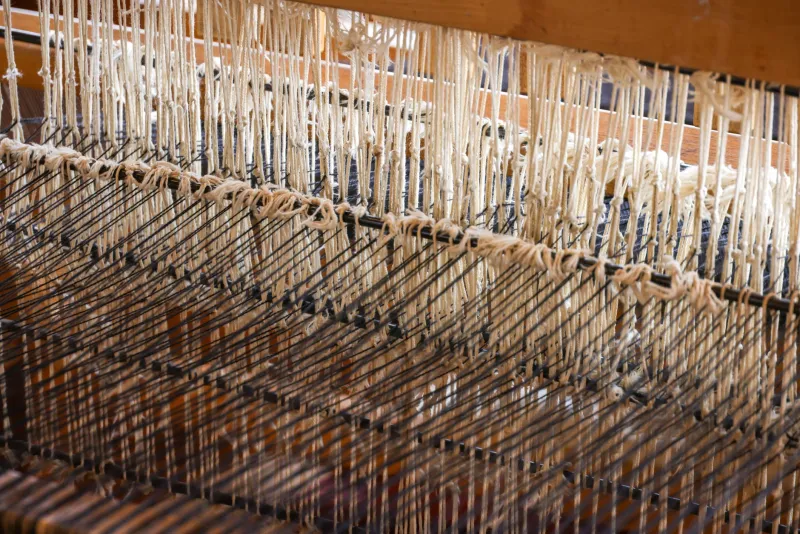
Many Hands, One Tension: The New Social Life of Warping
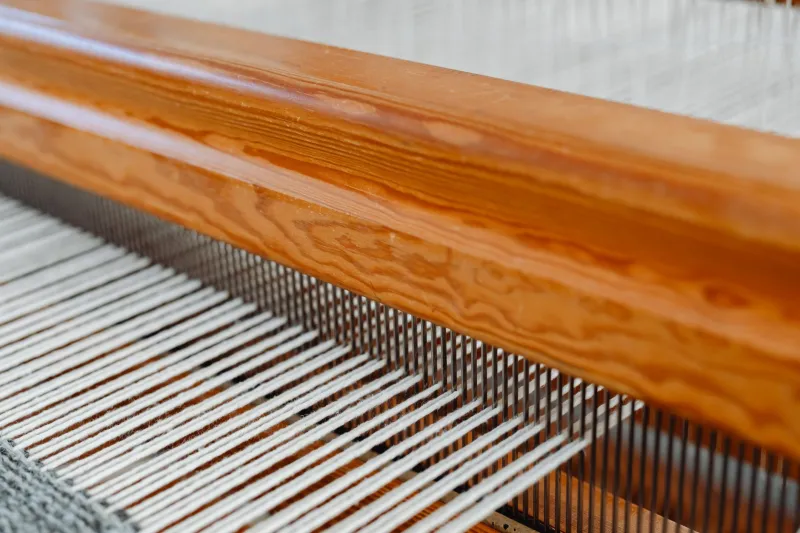
There is a particular silence that settles over a room when a warp is being made. It is not the peaceful silence of a finished cloth or the absorbed hush of throwing a shuttle. It is the tense, tick-tock silence of counting. Cones line up like patients in a waiting room. Threads run from a warping mill to a peg, or from a creel to the back of a loom, and someone is always saying a number under their breath.
Warping is the long game of weaving. Before the first pick, before the rhythm, before the cloth, there is a calculation: how many ends, what length, what colour order, what sett. Then there is the physical slog of measuring, spreading, beaming and threading. It is precise, repetitive and notoriously easy to get wrong. For many weavers, it is also the most solitary part of the craft — a job done alone, often at the end of the day, with the radio on and the door shut.
In 2026, that is starting to change. Across the UK, warping is being pulled out of the back room and onto shared tables. Village halls, studio co-ops, guild rooms and even a few pubs with generous back rooms are hosting what makers are calling warping days: part work session, part teaching moment, part alibi for cake. The idea is simple. Bring your warp, bring your questions, bring a spare pair of hands. Leave with a beam wound, a cross checked and a few fewer hours alone with your own doubts.
The choreography of a shared warp
On paper, shared warping sounds chaotic. A warp is a private architecture. The cross — that crucial figure-of-eight that keeps the threads in order — is a personal contract between weaver and loom. The lease sticks, the raddle, the tension box: these are tools that usually answer to one pair of hands.
In practice, a well-run warping day is less chaos than choreography. One person counts cones. Another holds the tension. A third watches the cross and calls out when a thread strays. The weaver in charge does not relinquish control; they distribute attention. The job becomes a series of small, checkable steps rather than one long, anxious push.
That distribution matters. Warping errors are expensive in time. A missed end or a crossed thread can mean re-threading heddles, re-sleying the reed, or starting again. When two or three people are watching, mistakes surface earlier. The cross is examined by more than one pair of eyes. The count is confirmed out loud. The warp is beamed with someone else cranking the handle and someone else keeping the sheets flat. It is not that the work gets faster, exactly. It is that it gets less lonely, and often more accurate.
Small mills, short warps, shared kit
The rise of shared warping has been helped by the quiet proliferation of small warping mills and sectional warping setups in UK studios. These are not industrial machines. They are modest pieces of kit — often second-hand, often repaired, often shared between a handful of weavers — that make short warps and sample lengths less punishing to produce. A small mill can wind a warp quickly and evenly, but it still needs setting up, checking and beaming. That setup is where the social element comes in.
Some studios now run regular warping clinics: a few hours where members can use the mill, ask for help with a tricky count, or simply work alongside others. The model suits the growing number of weavers who work alone but do not want to work in isolation. It also suits newer makers who have learned the basics of weaving but have not yet warped a loom without a tutor looking over their shoulder.
There is a practical economy to it, too. Cones get swapped. Spare lease sticks appear. Someone brings a better raddle. Someone else knows how to fix the tension brake on an old floor loom. The shared day becomes a low-key skill exchange, without the formality of a course.
Tension as a social contract
If there is a philosophical heart to the shared warp, it is tension. Not the emotional kind, though a warping day can produce that too. The physical tension of the warp is the thing that decides whether the cloth will behave. Too loose, and the shuttle dips. Too tight, and the selvedges pull in. Uneven, and the whole web tells you so, pick after pick.
When several people help beam a warp, tension becomes a shared responsibility. The person cranking the beam has to feel the resistance. The person guiding the sheets has to watch for slacks and ridges. The person at the front has to call the pace. It is a small lesson in trust: you are letting other people handle the part of the process that will most affect your finished cloth. Most weavers report that it makes them more careful, not less. When someone else is watching, you check the cross twice.
There are limits, of course. Not every warp wants a crowd. Complex colour orders, very fine counts and high-twist yarns can demand a quieter room and a single pair of hands. Tea near an open warp is a risk no one needs. And a warping day only works if someone is clearly in charge. The best ones have a host, a plan and a firm end time. Sociability is the by-product, not the point.
What the shared warp leaves behind
After the warp is beamed and the lease sticks are tied, there is usually a pause. The loom is dressed. The hard part is over. People stand around, slightly tired, slightly pleased. Someone puts the kettle on. The conversation turns from ends per inch to something else entirely.
That is the quiet value of the warping party. It takes the most tedious stage of weaving and turns it into a small act of community. It passes on knowledge without a syllabus. It makes the studio feel less like a solitary confinement and more like a workshop. And it leaves the weaver with a better warp, a few new contacts, and the sense that the long job was not theirs alone.
In a craft that often celebrates the solitary maker at the loom, that is worth noting. The cloth still comes from one loom, one pair of hands, one set of decisions. But the warp — that long, patient beginning — is increasingly being made together. And the tension, somehow, holds.