Glass Walls, Live Warps: The High-Street Studios Letting Shoppers Watch Cloth Grow
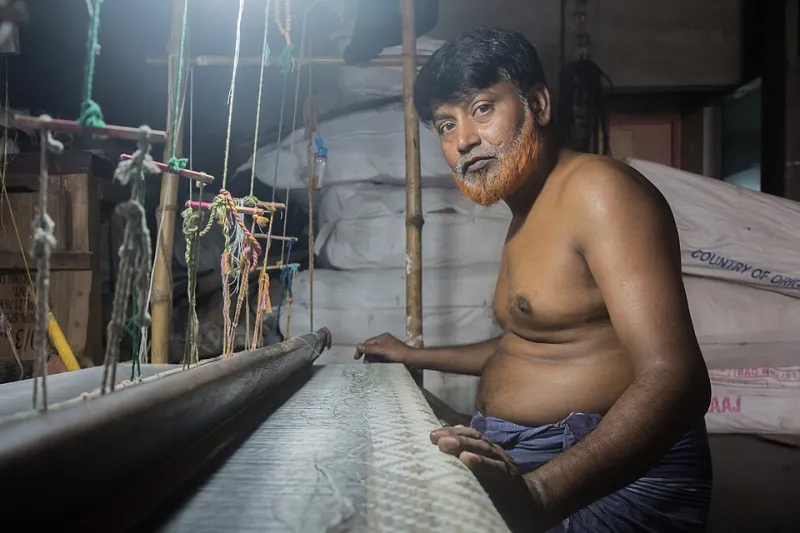
Photo: Syed Sajidul Islam, CC BY-SA 4.0, via Wikimedia Commons
There is a particular sound a high street makes when it is trying to stay alive. Not the old bustle of tills and bus queues, but the newer soundtrack of pop-ups, community noticeboards and temporary window displays. In some UK towns this autumn, that soundtrack has picked up a different rhythm: the soft knock and shuffle of a handloom, working behind glass.
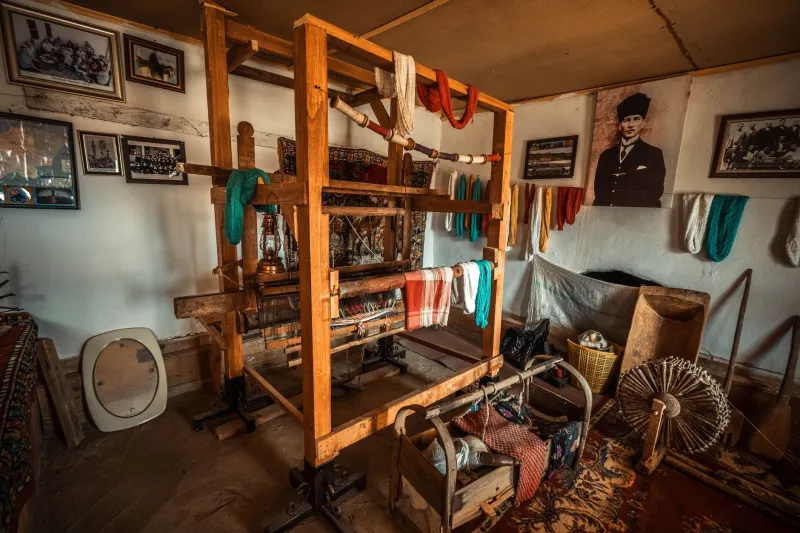
Weavers are moving into empty shopfronts. Not as a gimmick, and not always as a permanent shop, but as a way of making cloth where people can see it happen. The loom goes in the window. The warping mill sits near the door. The sign says something honest like ‘working studio’ rather than ‘retail experience’. Passers-by stop, frown, point, and then — often — come in.
The window as a workshop
A shopfront is not a neutral space. It comes with expectations: opening hours, lighting, a certain performance of availability. Weavers who take on these units tend to work with that rather than against it. They put the loom at an angle where the shed is visible. They leave a basket of weft samples by the door. They accept that a good chunk of the day will involve answering the same pleasant question: ‘Is that really handmade?’
In one sense, nothing has changed. Cloth still takes time. A warp still has to be wound, threaded and tied on. The difference is that the fiddly, stop-start, deeply unglamorous parts of weaving are suddenly on display. There is no back room to hide the mistakes in. The tea break is public. The unpicking is public. The moment when a shuttle catches and the weaver mutters something under their breath is public too.
For some makers, that is the point. Textile work has spent decades being tucked away in spare rooms, sheds and upper-floor studios. A shopfront says: this is work, it happens here, and it is part of the town.
What an audience does to the work
Watching and being watched changes a maker’s rhythm. Most weavers who have tried a visible studio say the first week is exhausting in a way they did not expect. Not because of the weaving itself, but because of the interruptions. A loom in a window invites conversation. Some of it is lovely. Some of it is about parking.
There is also a subtle pressure to look busy. Handweaving is full of thinking time — staring at a draft, checking a selvedge, deciding whether a colour is working. Under glass, that can feel like idleness. Several makers describe developing a kind of public-facing shuffle: move the shuttle, adjust the beater, straighten the lease sticks, look purposeful. The cloth does not care. It will take the time it takes.
The upside is less romantic but just as real. People who watch cloth being made are far more likely to understand why it costs what it costs. A scarf that seems expensive on a shelf becomes reasonable when you have seen twenty minutes of someone’s life go into two inches of warp. Visibility does not automatically sell the work, but it does explain it.
The economics of being seen
Empty high-street units are not a free gift. Even a short lease comes with rent, business rates, insurance and the small matter of making the place safe and warm. Weavers are rarely flush with cash. The shopfront model tends to work when it is a partnership: a council or landlord offering a meanwhile space, a local arts organisation helping with the paperwork, a maker willing to take on the risk of being open to the public.
Some towns have used these units as a soft landing for craft businesses that might otherwise stay invisible online. Others have found that a working studio draws a different kind of footfall — not just shoppers, but people who have come specifically to see the loom. Craft tourists are a real thing in the UK. They will travel for a workshop, a mill visit or a chance to buy yarn directly from the person who made it.
But the model is fragile. A shopfront studio can become a full-time job in public relations. The weaving has to fit around the opening hours, not the other way round. Makers who thrive tend to be clear about boundaries: certain days for making, certain days for talking, a sign on the door that says ‘weaving in progress’ without apology.
Not every town needs a peep show
There is a version of this trend that feels less like a working studio and more like a display cabinet. A loom placed in a window with no one at it, a basket of fleece, a chalkboard about heritage. It looks lovely. It does not make cloth. The difference matters. The best shopfront studios are genuinely worked in: warps are tied on, samples are cut off, the floor collects the usual fuzz and offcuts.
That mess is part of the offer. It tells people that handweaving is not a polite demonstration but a practical, sometimes awkward, deeply human activity. It also gives the maker a reason to leave the house. For anyone who has spent too long working alone at the back of a building, that is not a small thing.
A different kind of shop
A loom in a window will not save the high street on its own. It will not fill every empty unit, and it will not make handwoven cloth cheap. But it does something quieter: it puts textile work back into the everyday life of a town. People see it on the way to the bank. Children ask what the strings are for. Someone remembers a grandmother who had a loom in the front room.
In 2026, with so much of our shopping flattened into screens, there is something stubbornly appealing about a craft that refuses to be hidden. The window is not just a window. It is a claim on space, a slow advertisement, and a reminder that cloth begins with a person, a loom and a bit of noise.