Field, Fibre, Loom: The Quiet Return of British Flax
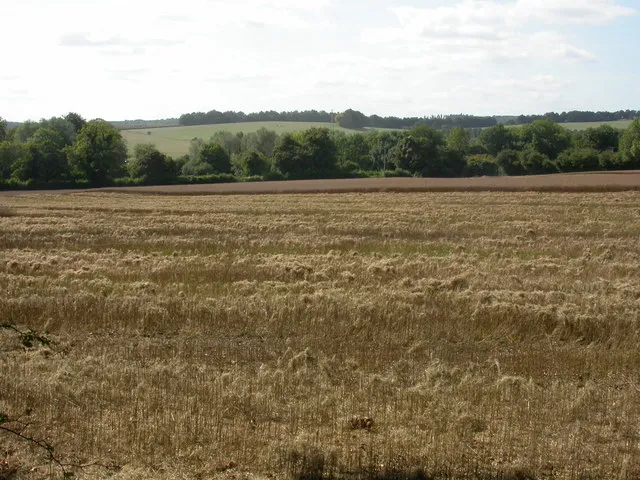
Photo: Mike Faherty, CC BY-SA 2.0, via Wikimedia Commons
There is a field in Norfolk that, for a few weeks each June, looks as if someone has tipped a pot of blue ink across it. Flax flowers are brief and electric, and they signal something quietly significant: a crop that was once central to European cloth-making is being grown again in the UK, not as a museum piece but as part of a small, determined attempt to rebuild a homegrown linen chain.
The idea is simple to describe and maddening to execute. Grow flax. Ret it. Scutch it. Hackle it. Spin it. Weave it. Sell it. Each step needs knowledge, kit and patience — and the UK currently has gaps at almost every stage. Yet something is shifting. In 2026, the question is no longer whether British linen is possible. It is whether it can become practical.
Why handweavers are drawn to local flax
For handweavers, British-grown flax has an obvious pull: it is traceable, tactile and a bit unruly. Imported linen is often consistent to the point of anonymity — beautiful, but hard to place. Local flax arrives with a story attached: a field, a grower, a weather event, a batch number.
It also behaves differently. 'British flax often has more character,' says one weaver in Suffolk who has been trialling small lots for scarves and samples. 'You get slubs, colour variation, a bit of stubbornness. For production that's a headache. For handweaving it's the point.'
There is a practical appeal, too. Handweavers can work with shorter runs and imperfect yarn that a large mill would reject. They can blend flax with British wool, or use it in weft-faced pieces where consistency matters less. And because linen is strong, cool and gets softer with use, it suits the kind of cloth people actually want to keep: scarves, towels, bags, table runners, simple garments.
The missing middle: retting, scutching and spinning
The romantic version of the flax revival stops at the blue flowers. The real version starts after harvest, when the stalks have to be retted — essentially rotted in a controlled way so the fibres separate from the woody core. Dew retting relies on weather and time; water retting needs clean water and careful management. Both are fiddly, and neither fits neatly into a modern arable rotation.
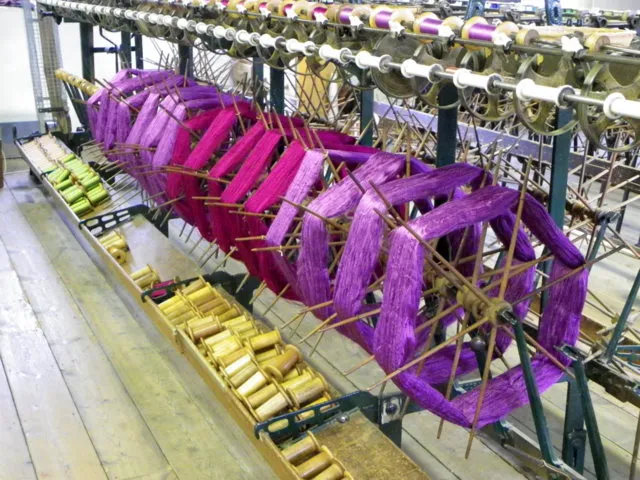
Then comes scutching, which breaks the straw and removes the shive, followed by hackling, which combs the fibres into a spinnable state. Only then can the fibre be spun — and linen spinning is not the same as spinning wool. It needs different equipment, different humidity, different skills. In the UK, that 'missing middle' is the bottleneck. There are growers, there are hand-spinners, there are weavers. What there is not yet is a reliable, affordable processing chain between them.
A tonne of flax straw yields a surprisingly small amount of usable fibre, and the equipment to process it is specialised. That makes small-scale processing expensive and large-scale processing risky. Several projects are working on it — micro-mills, mobile scutchers, shared equipment, co-operative models — but nobody would claim the problem is solved.
A web, not yet a chain
What exists in 2026 is less a chain than a web. Growers in East Anglia, Sussex and parts of Scotland are experimenting with fibre varieties. Hand-spinners and small mills are buying small lots and learning as they go. Weavers are testing the results in scarves, samples and limited collections. Research projects and fibre networks are sharing knowledge, often informally.
That web is fragile, but it is also more resilient than a single supply chain would be. A weaver can buy 2kg of British flax from a spinner and make a dozen scarves. A grower can trial a hectare without betting the farm. A mill can add a linen line without rebuilding its entire floor.
The catch is consistency. One batch may be soft and pale; the next may be coarser or darker. For handweavers, that is part of the charm. For anyone trying to sell a repeatable product, it is a real commercial challenge.
Is 2026 the turning point?
It could be a hinge year, but not because everything suddenly lines up. The interest is there: in local fibre, in regenerative agriculture, in cloth with a provenance you can visit. Funding bodies and heritage mills are paying attention. Consumers — at least some of them — are asking where linen comes from.
But turning points are made of boring things: storage, drying space, training, consistent quality, affordable processing, and buyers who understand why a British linen scarf costs more than an imported one. The revival will not be won by a single harvest. It will be won by a hundred small decisions to keep going.
For handweavers, the most useful thing they can do is simple: buy the fibre, test it, talk about it, and accept that local linen will not look like the flawlessly uniform stuff in a sample book. British flax is not yet a fully fledged industry. In 2026, it is something more interesting — a work in progress, with blue flowers.