Before the Warp Is Wound: The Commissions British Weavers Quietly Decline
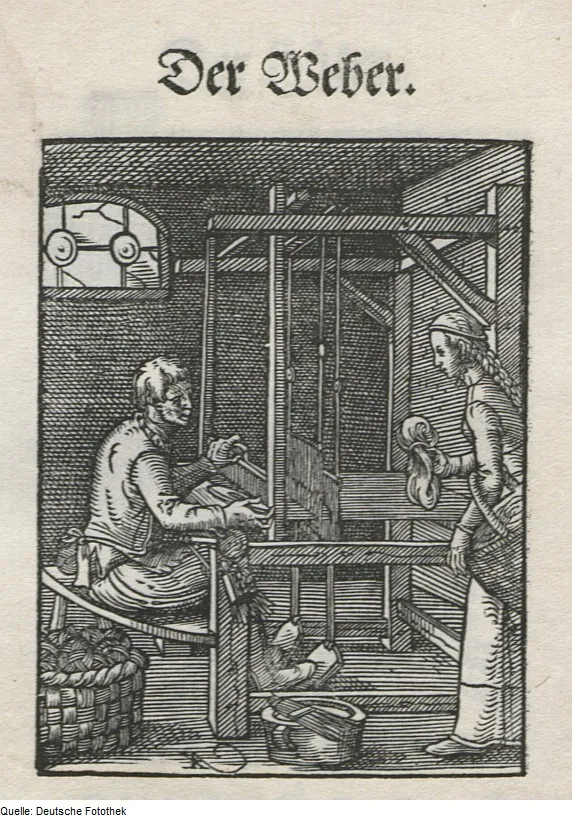
Photo: Unknown, Public domain, via Wikimedia Commons
Ask a handweaver what they make and you get a tidy answer: scarves, throws, yardage, samples, one-off pieces for interiors. Ask what they turn down and the conversation shifts. The refusals are where the real economics sit. They are also where you find the ethics, the humour and the occasional scar tissue. For this piece I spoke to weavers across the UK — a small studio in Bristol, a mill-trained weaver in Hebden Bridge, a designer working from a shed in Powys, another in Dundee — about the commissions that never reach the loom. None of them wanted to name clients. All of them had stories.
The pattern was not a simple tale of difficult customers. It was more interesting than that. The briefs that get declined tend to ask a weaver to pretend that time, fibre, colour or authorship do not matter. They ask for cloth as if it appeared by magic, rather than by a sequence of small, stubborn human decisions. Saying no is part of the job. It just rarely makes the portfolio.
The deadline that arrives before the yarn
One of the most common refusals is the impossible timeline. A hotel group wants forty throws for a refurbishment in three weeks. A bridal designer needs a bolt of handwoven silk by Friday. A film production wants a custom length of Irish tweed-style cloth, but can only confirm the colour after the shoot has started. These briefs are not malicious. They are often written by people who have never seen a warp being wound, or who assume that handwoven means slow only in a romantic, flexible way.
In reality, a handloom does not speed up because the launch date is fixed. Sampling alone can swallow a fortnight. Yarn has to be sourced, dyed, checked for joins, tested for shrinkage and washed off. A weaver in Bristol told me she now sends a one-page reality sheet with every quote: minimum lead times, sampling costs, what happens if the yarn arrives late. She said it has cut out about half the awkward conversations. The other half, she added, are still worth having.
Fibre, provenance and the awkward questions
The second big category is fibre. A client sends a cone of yarn bought from an online marketplace with no paperwork. Or asks for a wool throw at a price that only works if the fleece has no traceable origin and the spinner has no name. For many UK weavers, this is where the polite no becomes a firm one. Provenance is not a marketing add-on. It is part of the design brief, whether the client realises it or not.
A weaver in Powys put it plainly: she needs to know what she is putting on the loom, not just because of allergies or felting, but because she has to be able to stand behind the cloth. If a yarn cannot be traced, or if the client wants a natural fibre but refuses to pay for the certification that proves it, she walks away. Sometimes that means losing a deposit-sized job. Sometimes it means the client goes elsewhere and comes back six months later, chastened. Both outcomes are part of the trade.
Colour by committee
Then there is colour. Handweaving is full of beautiful near-misses: dye lots that shift, natural fleece that varies, wet-finished cloth that dries a shade deeper than expected. Some clients love this. Others want a Pantone reference matched exactly across two hundred metres, with no variation and no discussion. That brief is not impossible in principle, but it usually belongs to a different manufacturing system.
One Hebden Bridge weaver described a recurring request: can you make it look exactly like the sample, but in a different colour, with a different yarn, for a lower price? She now treats these as three separate questions. The colour can be matched within reason. The yarn changes the hand and the drape. The price is the price. If the client cannot accept that the three are linked, the commission is not ready. She has learned to say so early, before the sampling stage turns into an expensive negotiation.
The brief that erases the maker
Perhaps the thorniest refusals are the ones about authorship. A client loves a weaver's work but wants it copied by a cheaper maker. A brand wants a signature cloth with the weaver's name removed from the story. An interiors studio asks for samples on spec, then quietly takes the ideas to a mill. A gallery wants exclusivity without a fee. These are not just commercial irritations. They cut at the reason many people weave in the first place.
A Dundee designer told me she once declined a large commission because the contract required her to hand over all process images and never show the finished piece in her own portfolio. The fee was decent. The erasure was not. She said no, and the client found someone else. She still thinks about it, but not with regret. For her, credit is not vanity. It is how a small studio builds the next job.
A no is part of the service
What emerges from these conversations is not a picture of precious artisans turning down work for the fun of it. Most weavers need the work. The refusals are strategic. They protect the loom from jobs that would be miserable to make, impossible to finish or damaging to the studio's reputation. They also protect the client from buying something that was never going to meet their expectations.
The best weavers I spoke to are unusually good at explaining this. They offer alternatives. They suggest a different fibre, a longer lead time, a smaller edition, a clearer credit line. They quote for sampling rather than giving it away. They put boundaries in writing. In 2026, with so much talk about transparency in UK textiles, the refused commission is a useful little window into how the handwoven economy actually works. The cloth on the loom is only half the story. The other half is everything that was kept off it.
At iWeave, we tend to celebrate the finished warp. But maybe we should also raise a glass to the polite no — the one that keeps a studio honest, a client educated and a craft intact.